Night vision explained: no glow vs low glow
How trail cameras see in the dark, why night images are black and white, and the trade-offs between 850 nm low glow, 940 nm no glow and white flash.
- Time
- 10 minutes
- Difficulty
- Easy
- Steps
- 6
- Checked
What you’ll need
- Your camera's spec sheet (IR type and night range)
Safety first
- A visible red glow or white flash makes a camera easier for thieves to find. Think about this if it's in a public or semi-public spot.
Step by step
-
Step 1: How night images are made
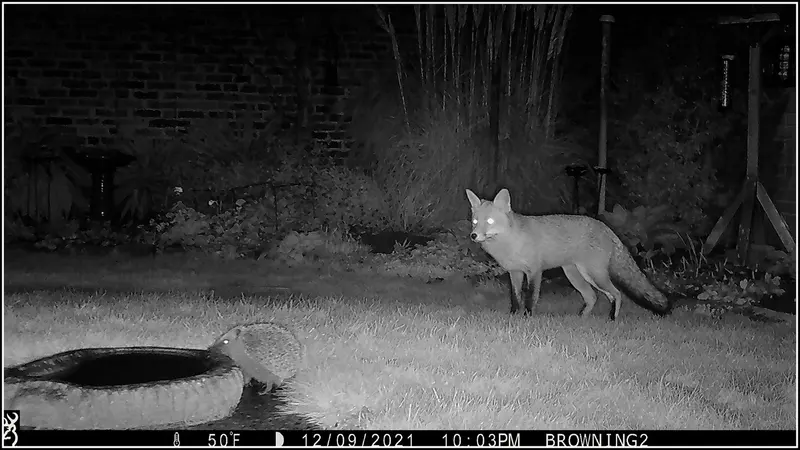
At night the camera switches on infrared LEDs and moves its IR-cut filter aside, so the sensor can record light people can't see. Because infrared carries no colour information, IR night images are black and white.
Next: step 2 -
Step 2: Low glow (about 850 nm)
These LEDs show a faint red glow if you look at the camera. Trailcampro says red-glow units generally give better illumination, image quality and flash range than no-glow units. NatureSpy recommends low glow where possible for wildlife.
Next: step 3 -
Step 3: No glow (about 940 nm)
Invisible to people, so the camera is much harder to spot at night. That's why NatureSpy suggests it for security and places at risk of theft or vandalism. The trade-off is less light. NatureSpy estimates roughly 30% less brightness and range. Cameras compensate with slower shutter speeds, which means more blur on moving animals.
Next: step 4
-
Step 4: White flash
A visible white flash or white LEDs give colour night pictures. But the flash is obvious to people, which gives the camera's position away. In a side-by-side comparison by Trailcampro, the infrared site recorded more deer than the white-flash site.
Next: step 5 -
Step 5: Do animals notice?
NatureSpy says animals generally respond similarly to low glow and no glow, and that scent and noise may alert them more. Keep your visits short and quiet, and avoid handling the camera more than you need to.
Next: step 6 -
Step 6: Get the best night images
Keep subjects within the stated night range. Bushnell's Cellucore 30 manual, for example, gives about 3–24 m. Avoid a pale fence or wall close to the camera, which can reflect light back. If your camera has a night flash mode, choose a fast or short-range option to reduce blur on quick animals.
Tips
- In a small garden, the reduced range of no glow rarely matters. Image sharpness may matter more.
- If night video looks blurred, check whether your camera has a 'fast motion' or shorter-range illumination setting.
| Type | Visible to people? | Night image | Range and sharpness | Good for |
|---|---|---|---|---|
| Low glow (~850 nm) | Faint red glow | Black and white | Generally best | Most wildlife filming |
| No glow (~940 nm) | No | Black and white | Less range, more blur | Security, theft-prone spots |
| White flash | Yes | Colour | Depends on model | Colour ID where discretion doesn't matter |
Questions people ask
Why are my night pictures black and white?
Infrared lighting can't record colour. Only white-flash cameras give colour night images.
Is no glow better for wildlife?
Not necessarily. NatureSpy says animals react similarly to both, and low glow gives better range and sharper images. No glow mainly helps keep the camera hidden from people.
Do no-glow cameras have shorter range?
Generally yes. NatureSpy estimates around 30% less brightness and range than low glow.
Sources
Checked 18 October 2026. We wrote this guide in our own words, using:
- Trailcampro: trail camera anatomy (trailcampro.com)
- NatureSpy: basic features and settings of trail cameras (naturespy.org)
- Trailcampro: incandescent vs infrared game cameras (trailcampro.com)
- Bushnell Cellucore 30 instruction manual (copy hosted by Adorama) (adorama.com)
Was this guide helpful?
Report a problem with this guide
Printed from wildlifetrailcameras.co.uk/guides/night-vision-explained-no-glow-vs-low-glow/ · Checked 18 October 2026 · Research reviews, not hands-on tests: specifications come from manufacturers and findings from the independent reviewers we link to. Check the law before filming beyond your own property.