Batteries, cards & accessories
Trail camera batteries and power
Lithium, alkaline or rechargeable? What the battery datasheets and camera manuals say about cold weather, voltage and external or solar power.
- Time
- 15 minutes
- Difficulty
- Easy
- Cost
- Moderate cost
- Steps
- 7
- Checked
What you’ll need
- Lithium AA batteries Search Amazon for lithium AA batteries
- Your camera's manual
- Maker-approved external battery pack or solar panel (optional) Search Amazon for trail camera solar panel
As an Amazon Associate we earn from qualifying purchases. The Amazon links go to search results, so you can compare what’s available.
Safety first
- Don't connect a mains adaptor or third-party power supply unless the maker approves it. Manuals warn it can make the camera malfunction.
- Don't use damaged or leaking batteries, and dispose of used batteries at a battery recycling point.
Step by step
-
Step 1: Check what your manual allows
Battery advice differs between makers and models. Bushnell's manual, for example, recommends lithium AAs, says alkalines can be used with shorter life, and says rechargeables are not recommended. Follow your own manual first.
Next: step 2 -
Step 2: Lithium AAs for cold weather and long deployments
Energizer rates its Ultimate Lithium AA (L91) for -40°C to 60°C, with a shelf life of 25 years at 21°C. Its datasheet shows lithium holding capacity at higher drains where alkaline falls away. Trailcampro says lithium AAs have a flat voltage curve and about twice the capacity of the best alkalines. They cost more but are the usual choice for winter or remote sites.
Next: step 3 -
Step 3: Alkaline AAs: cheaper, less tolerant of cold
Energizer's alkaline AA (E91) is rated -18°C to 55°C. Trailcampro notes alkalines struggle below freezing and can leak, so take them out if the camera will be stored.
Next: step 4
-
Step 4: Rechargeable NiMH: mind the voltage
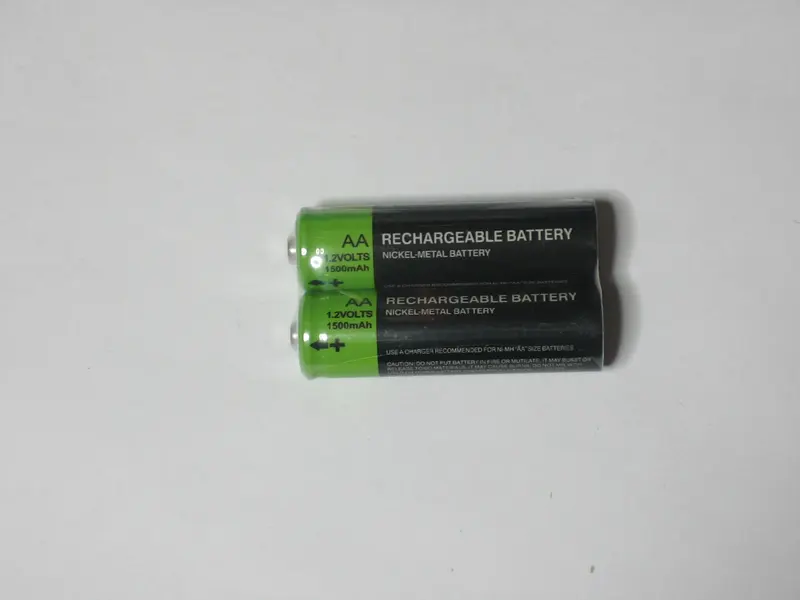
NiMH AAs are 1.2 V per cell, compared with 1.5 V for alkaline and lithium. Eight in series give about 9.6 V, which Trailcampro says may be too low for some cameras. Energizer's NiMH datasheet gives a use range of 0°C to 50°C and charging at 0°C to 40°C. Use NiMH only if your manual allows it.
Next: step 5 -
Step 5: Never mix batteries
Bushnell warns never to mix old and new batteries or different brands, and not to use damaged cells. Replace the full set at once, and fit them the right way round.
Next: step 6 -
Step 6: External power and solar: use approved accessories
Many cameras have a DC socket. Bushnell says to connect only its own accessory solar panel to the DC In jack on its cellular cameras. Its manual says the camera runs from the panel's battery and falls back to the AAs if voltage drops. Browning cameras take 12 V. A UK retailer says Browning's own power packs are the only approved sources and warns against mains supplies. Trailcampro says solar packs with their own battery are generally more compatible than bare panels.
Next: step 7 -
Step 7: Make batteries last longer
Bushnell notes battery life drops with multi-shot, short delays and higher flash output. Night clips are especially demanding because the IR LEDs are on. Choose settings to match how often you can visit, and keep a spare set of charged or fresh batteries.
Tips
- Battery-life claims are tied to a set number of photos a day. Bushnell's six-month figure for one model assumes 30 images a day on lithium AAs.
- Mark the date you fitted batteries on a strip of tape inside the case.
When to get expert help
If you want to run a camera from mains power or a PoE cable outdoors, ask a qualified electrician to install a suitable weatherproof supply.
| Battery | Nominal voltage | Maker's rated temperature range | Notes |
|---|---|---|---|
| Lithium AA (Energizer L91) | 1.5 V | -40°C to 60°C | Holds capacity at high drain; long shelf life |
| Alkaline AA (Energizer E91) | 1.5 V | -18°C to 55°C | Cheaper; can leak; weaker in the cold |
| NiMH AA (Energizer NH15-2300) | 1.2 V | Use 0°C to 50°C; charge 0°C to 40°C | Check your manual allows rechargeables |
Questions people ask
Are lithium batteries worth the extra cost?
For cold weather and long deployments, usually. Energizer rates its lithium AAs down to -40°C against -18°C for its alkalines, and makers such as Bushnell recommend lithium.
Can I use rechargeable batteries?
Only if your manual allows it. NiMH cells are 1.2 V rather than 1.5 V, and some makers, Bushnell among them, don't recommend them.
Will any solar panel work?
Use only the panel or pack your camera's maker approves. Voltage and connector differ, and Bushnell, for example, says other external supplies shouldn't be used.
Why did my batteries die so fast?
Lots of night triggers, video, multi-shot, short delays, weak 4G signal and cold weather all shorten battery life.
Sources
Checked 18 October 2026. We wrote this guide in our own words, using:
- Energizer L91 Ultimate Lithium AA datasheet (data.energizer.com)
- Energizer E91 alkaline AA datasheet (data.energizer.com)
- Energizer NH15-2300 NiMH AA datasheet (data.energizer.com)
- Bushnell Cellucore 30 instruction manual (copy hosted by Adorama) (adorama.com)
- Trailcampro: trail camera anatomy (trailcampro.com)
- Perdix Wildlife Supplies: Browning solar camera power pack (perdixwildlifesupplies.com)
- Trailcampro: Browning solar panel power pack (trailcampro.com)
- Adorama: Browning BTC-XB trail camera power pack (adorama.com)
Was this guide helpful?
Report a problem with this guide
Printed from wildlifetrailcameras.co.uk/guides/trail-camera-batteries-and-power/ · Checked 18 October 2026 · Research reviews, not hands-on tests: specifications come from manufacturers and findings from the independent reviewers we link to. Check the law before filming beyond your own property.