Using a trail camera for garden birds
Trail cameras can catch the birds visiting your feeders, bath and nest boxes, but small, fast birds need a closer, more sensitive set-up than mammals. Here's how to place the camera, keep feeders healthy and stay within the law around nests.
- Time
- 45 minutes
- Difficulty
- Easy
- Cost
- Low cost
- Steps
- 8
- Checked
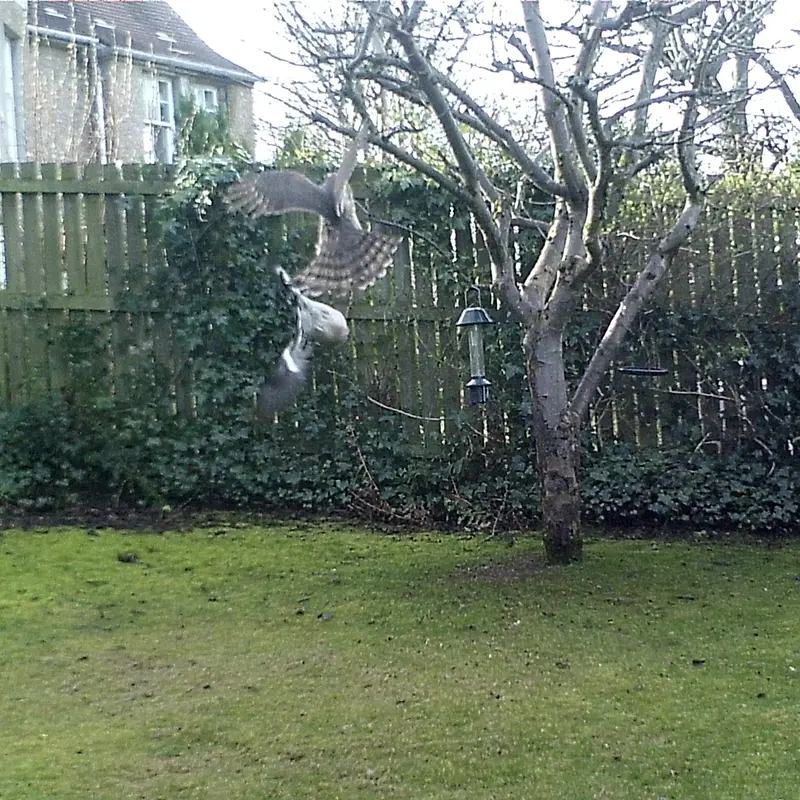
What you’ll need
- Trail camera (ideally one with a close focus range)
- Lithium AA batteries Search Amazon for lithium AA batteries
- SD card Search Amazon for micro SD card
- Hanging bird feeder with a rigid metal mesh for nuts Search Amazon for steel mesh peanut feeder
- Fat balls or suet (for May to October) Search Amazon for suet fat balls for birds
- Bird bath
- Nest box with camera (optional, fit before spring) Search Amazon for nest box camera
As an Amazon Associate we earn from qualifying purchases. The Amazon links go to search results, so you can compare what’s available.
Safety first
- Disturbing a Schedule 1 bird (such as the barn owl) at or near its nest is an offence without a licence. Never set or adjust a camera at such a nest during the breeding season.
- Don't open an occupied nest box to fit or check a camera.
- Stop feeding seed and peanuts in summer if you see sick, fluffed-up birds, and follow RSPB hygiene advice.
Step by step
-
Step 1: Pick a feeder spot you can frame
Choose a feeder, bird bath or regular perch you can point the camera at without the frame including your neighbour's windows or the street. Hanging feeders are best: the RSPB now advises against flat-surface feeders such as bird tables, window feeders and trays, because they are linked to a higher risk of spreading disease.
Next: step 2 -
Step 2: Get the distance right for focus
Most trail cameras are built to focus on animals a few metres away, so a bird right in front of the lens can come out blurred. Check the focus distance in your manual. If you want frame-filling close-ups, look for a camera sold for close-range or bird work; some models have come with screw-on close-up lenses. Otherwise, sit the camera far enough back to stay sharp and accept a smaller bird in the frame.
Next: step 3 -
Step 3: Set the height and angle
Browning suggests mounting the camera about 3–5 feet (roughly 0.9–1.5m) off the ground for feeder shots, tilted slightly down towards where birds land. For birds perching in shrubs, aim nearer their level. Avoid facing the sun, which causes glare and false triggers.
Next: step 4
-
Step 4: Choose sensitive, fast settings
Small birds give off little heat and move quickly, so use high sensitivity and the fastest trigger setting. Short video clips show feeding and squabbling better than single photos. Time-lapse mode, if your camera has it, can show activity across the day without relying on the motion sensor.
Next: step 5 -
Step 5: Feed safely through the seasons
The RSPB's July 2026 guidance asks people to pause seed and peanuts from 1 May to 31 October because of trichomonosis risk. Small amounts of mealworms, fat balls or suet are fine then, and you can offer the full range from 1 November to 30 April. Put nuts only in rigid steel mesh feeders, never nylon mesh bags, and avoid bread and hard, dry food in spring and summer as chicks can choke.
Next: step 6 -
Step 6: Keep everything clean
Clean feeders and baths at least once a week with hot soapy water followed by a non-toxic disinfectant or a 5% bleach solution, and change bath water every day (RSPB). A clean feeder also means clearer footage, as there is less mess on the ground to block the view.
Next: step 7 -
Step 7: Nest boxes: fit cameras before nesting starts
If you want to watch chicks, the RSPB suggests fitting a nest box camera before the breeding season starts, and leaving boxes alone as spring approaches. Don't open or rearrange a box once birds are using it. Clean boxes out from September once the nest is empty; unhatched eggs can only legally be removed between September and January (August to January in Scotland). See wildlife law and trail cameras for the rules on protected birds.
Next: step 8 -
Step 8: Record what you see
Your clips can feed into the BTO's Garden BirdWatch: you list the birds using your garden each Sunday-to-Saturday week, with hedgehogs and other wildlife as optional extras. Only count birds actually using the garden, not ones flying over.
Tips
- Move feeders to a new spot regularly if the camera allows; it helps reduce disease build-up.
- Peanuts dropped under feeders can attract badgers and other mammals at night, which you may also catch on camera.
- A plain background, such as a hedge a few metres behind the feeder, makes birds stand out better than a busy one.
RSPB feeding calendar (2026 guidance)
| Period | What to offer |
|---|---|
| 1 November – 30 April | Full range, including seed and peanuts (nuts in steel mesh feeders) |
| 1 May – 31 October | Pause seed and peanuts; small amounts of mealworms, fat balls or suet |
| All year | Clean feeders and baths weekly; fresh bath water daily; no flat-surface feeders |
Questions people ask
Why are my bird photos blurry?
The bird is probably closer than the camera's focus range. Move the camera back or use a model designed for close-range work.
Can I put a camera in a nest box that's already in use?
No. Fit cameras before the breeding season and leave occupied boxes alone, as the RSPB advises.
Should I feed birds seed in summer?
The RSPB's latest advice is to pause seed and peanuts from 1 May to 31 October and offer small amounts of mealworms, fat balls or suet instead.
Will a trail camera trigger for small birds?
Often, but not always. Use high sensitivity, fast trigger and keep the bird close enough to register; time-lapse is a useful backup.
Sources
Checked 18 October 2026. We wrote this guide in our own words, using:
- RSPB – Our latest guidance on feeding garden birds (rspb.org.uk)
- RSPB – How and what to feed your garden birds (rspb.org.uk)
- RSPB – Our ultimate guide to nestboxes (rspb.org.uk)
- Browning – Beginner's guide to backyard birdwatching with trail cameras (browningtrailcameras.com)
- TrailCamPro – Bushnell NatureView Cam HD review (close focus) (trailcampro.com)
- BTO – Garden BirdWatch: taking part (bto.org)
- Wildlife and Countryside Act 1981, section 1 (legislation.gov.uk)
- GOV.UK – Protected species: when to apply for a licence to survey, film or photograph them (gov.uk)
Was this guide helpful?
Report a problem with this guide
Printed from wildlifetrailcameras.co.uk/guides/trail-cameras-for-garden-birds/ · Checked 18 October 2026 · Research reviews, not hands-on tests: specifications come from manufacturers and findings from the independent reviewers we link to. Check the law before filming beyond your own property.