Watching badgers and foxes responsibly
Badgers and foxes make brilliant trail camera subjects, but badger setts are protected by law and feeding can cause problems for the animals and your neighbours. This guide shows how to film them without disturbance.
- Time
- 1 hour
- Difficulty
- Medium
- Cost
- Low cost
- Steps
- 8
- Checked
What you’ll need
- Trail camera with no-glow infrared
- Lithium AA batteries Search Amazon for lithium AA batteries
- Strap or bracket for a fence post or tree Search Amazon for trail camera mounting strap
- Security box or cable lock if the camera is out of sight Search Amazon for trail camera security box
- Dim torch with a red filter (for watching in person) Search Amazon for red light torch
As an Amazon Associate we earn from qualifying purchases. The Amazon links go to search results, so you can compare what’s available.
Safety first
- Disturbing a badger occupying its sett, or blocking or damaging a sett, is a criminal offence.
- Don't put a camera on land you don't own without the landowner's permission.
- In Scotland and Northern Ireland, check with NatureScot or NIEA if you plan to film near a sett or otter holt.
Step by step
-
Step 1: Know the law on setts
Under the Protection of Badgers Act 1992 it is an offence to damage or destroy a sett, block its entrances, let a dog into it, or disturb a badger while it is occupying a sett, whether you mean to or are reckless about it. Natural England says remote cameras don't need a licence if you set them while the animals are away from their resting places and they don't change the animals' behaviour. Anything that interferes with an occupied sett needs a licence.
Next: step 2 -
Step 2: Film paths, not entrances
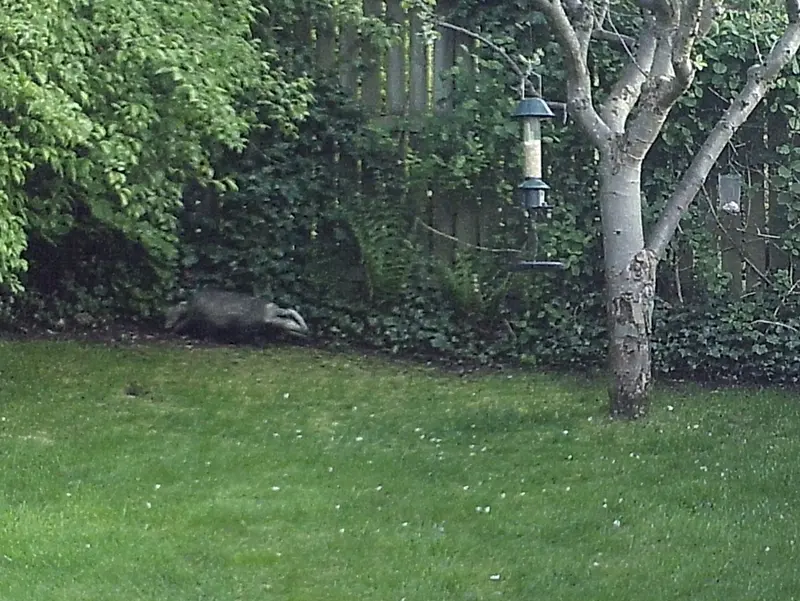
The easiest way to stay on the right side of the law is to film badgers and foxes where they travel and feed, such as a gap under a fence, a garden lawn or a well-worn path, rather than right at a sett entrance. Badger Trust says the best place for trail cameras is a secure spot such as a fence post on your own property.
Next: step 3 -
Step 3: Set up in daylight and keep visits short
Put the camera up and change cards during the day when badgers are underground and foxes are usually resting. Don't walk over a sett or close to its entrances; Badger Trust notes badgers can detect your scent for hours after you've been there. Check the camera as rarely as you can manage.
Next: step 4
-
Step 4: Mount for medium-sized animals
Badgers and foxes are bigger than hedgehogs, so a camera at around knee height on a post, angled slightly down along the path, usually works. Clear stems and long grass from in front of the lens. A no-glow camera is the least noticeable at night. See where to place a trail camera.
Next: step 5 -
Step 5: Think twice before feeding
Badger Trust does not recommend feeding badgers; in severe weather it says a small handful of peanuts will do, and in drought, water and covered cat biscuits. The Mammal Society says feeding foxes is not advised because it encourages them to rely on people. If you do put out a little food to bring animals into view, keep it small and occasional, only at night, and don't feed animals that have to cross a major road to reach you.
Next: step 6 -
Step 6: Choose foods carefully
For badgers, the Mammal Society suggests a light scatter of shelled, unsalted peanuts at night (small birds can choke on peanuts by day). For foxes it lists uncooked meat, eggs, fruit or boneless cooked meat, and says to avoid bread, cakes, chocolate, raisins or sultanas and cooked bones. If hedgehogs visit your garden, avoid attracting badgers and foxes, which can prey on them.
Next: step 7 -
Step 7: Watching in person
If you want to sit out near a sett, Badger Trust's tips are to be downwind, arrive at least an hour before dusk, wear dark clothes (not rustling waterproofs), skip the perfume, stay well back from the sett and use only a dim torch with a red filter.
Next: step 8 -
Step 8: Respect neighbours and record your sightings
Not everyone wants badgers or foxes in their garden, and the RHS warns neighbours may object to feeding. Log what you film with the Mammal Society's Mammal Mapper app or iRecord, or upload camera trap images to MammalWeb. Don't share the exact location of a sett publicly.
Tips
- Contact your local badger group: Badger Trust recommends them as the first port of call for advice.
- A sett entrance is usually a sideways D shape and larger than a rabbit hole (RHS).
- If you film a fox with mange, report it to a wildlife rehabilitation centre or the RSPCA/SSPCA rather than putting medicine in food (Mammal Society).
When to get expert help
Your local badger group, Badger Trust (01273 033440) or a licensed badger ecologist if you think a sett is affected by work in your garden or you're unsure whether a camera position could cause disturbance.
Questions people ask
Can I point a trail camera at a badger sett?
A camera set in daylight while badgers are underground, which doesn't change their behaviour, doesn't need a licence in England. But you must not disturb an occupied sett, so keep well back, don't walk on the sett and check it rarely. Filming feeding areas and paths is safer.
Is it illegal to feed foxes or badgers?
No, but Badger Trust and the Mammal Society both advise against regular feeding. A little occasional food at night is the most they suggest.
What should I do if I see someone interfering with a sett?
Call the police on 999 if it's happening now, or 101 afterwards, and report it to Badger Trust.
Will a no-glow camera scare badgers?
No-glow infrared is the least visible option, which makes it the best choice for shy animals.
Sources
Checked 18 October 2026. We wrote this guide in our own words, using:
- Protection of Badgers Act 1992, section 3 (legislation.gov.uk)
- GOV.UK – Protected species: when to apply for a licence to survey, film or photograph them (gov.uk)
- Badger Trust – Living with badgers (badgertrust.org.uk)
- Badger Trust – Responsible badger watching (badgertrust.org.uk)
- Badger Trust – Report a crime (badgertrust.org.uk)
- Mammal Society – Feeding mammals guidance (mammal.org.uk)
- Mammal Society – Red fox (mammal.org.uk)
- RHS – Badgers in your garden (rhs.org.uk)
- Mammal Society – Mammal Mapper app (mammal.org.uk)
- Biological Records Centre – iRecord verification (brc.ac.uk)
- Mammal Society – MammalWeb citizen science project (mammal.org.uk)
- NatureScot – Wildlife photography in Scotland (nature.scot)
- GOV.UK – Licence to photograph wildlife (Northern Ireland) (gov.uk)
Was this guide helpful?
Report a problem with this guide
Printed from wildlifetrailcameras.co.uk/guides/watching-badgers-and-foxes-responsibly/ · Checked 18 October 2026 · Research reviews, not hands-on tests: specifications come from manufacturers and findings from the independent reviewers we link to. Check the law before filming beyond your own property.